As explained by others in earlier posts - break disks will rust when the car is not used for a few days/weeks. Take the car for a drive and they will be like new again after a few miles…
Ecoair dd122 here, brilliant for cold garage.
The only issue for me is I can’t use a 240v timer to control it due to the run on/cool down requirement of the machine
Thanks for all the input. Taking the car out for a run is not an option so have invested in an Ecoair DD3 which has just been delivered so hopefully it will help a bit.
You could try putting wheel covers on. I just bought some for my motorhome, mainly to protect the tyres but I’m sure it may assist in slowing down the rust on discs. For my mx5 it lives in the garage and never has rusty discs.
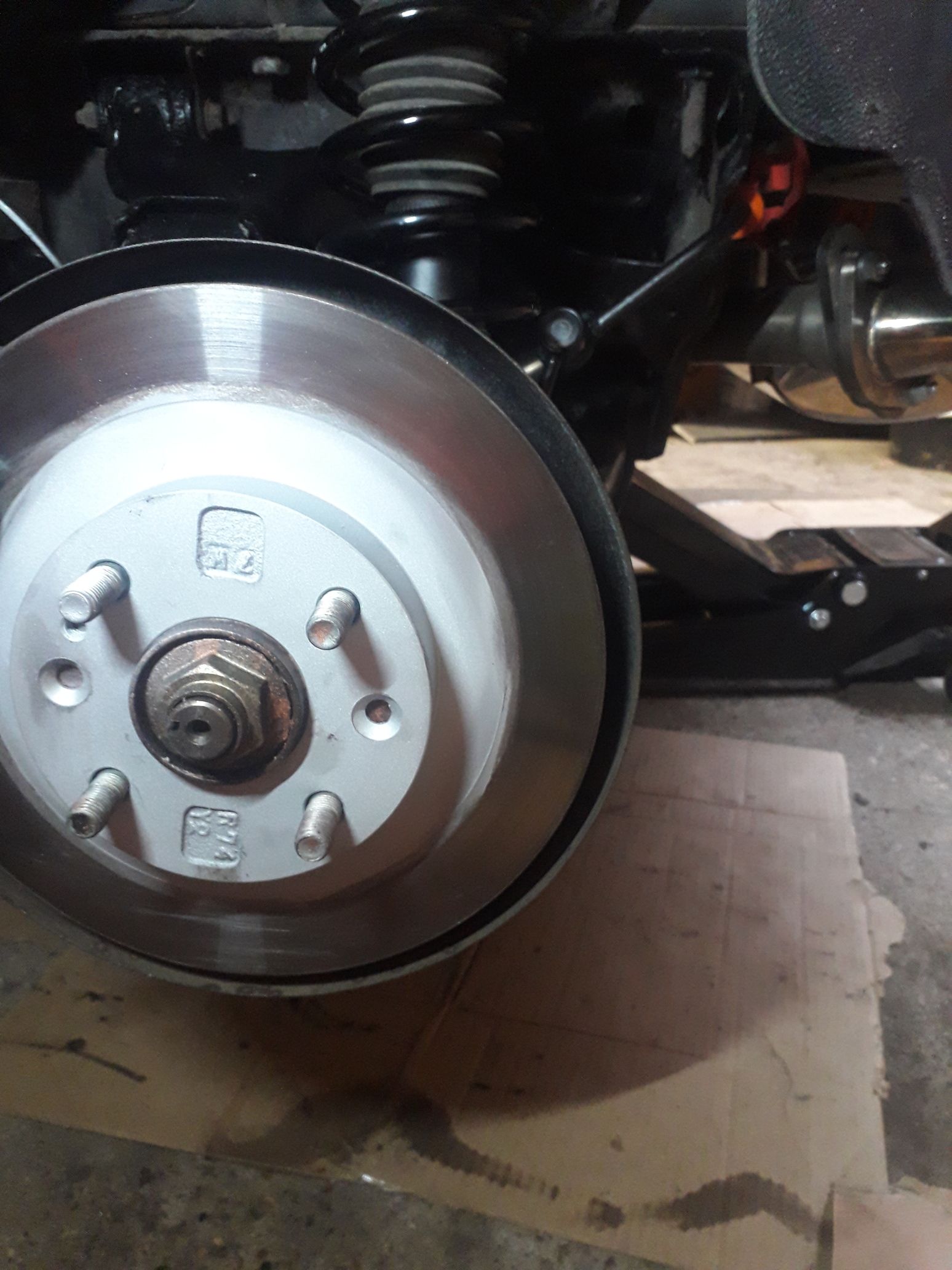
The newly-sprayed area looks neat, I agree, but it won’t stay that way for long unless you use some high-temperature paint such as Sperex VHT, used typically on exhausts.
Also, please don’t paint the wheel mounting face - not only is it invisible, but the paint will gradually wear off or compress and the wheel studs will lose some tension. The spigot wheel centering location will be more difficult when painted, too. The stud fit (and hence thread efficiency) is corrupted by paint, and can change the applied wheel bolt tension.
You should check the wheel bolt/nut torques after 100km, then 1000km, for settlement.
It’s a well-known problem with truck and trailer wheels, and contributes frequently to the ‘lost-wheels syndrome’
Your car, your call…
Aldi.
3 Likes
It was immaculate as the car is always in my garaged. After 2 weeks away the relatively new discs had to be treated.
I hear you loud and clear and thanks for the info.

THIS!!!
Sorry, I know it is going to upset some people, but stressing over a bit of rust on discs but then doing this. The friction between the hub/disc and wheel is of paramount importance. Sticking paint between the two is not advised.
2 Likes
My MX5 mark 2 is kept in damp conditions during winter months when pads can stick to discs - if there’s enough thickness on the pads, they can be eased from the discs otherwise they’ll fall apart and will need replacing. As for the discs they’ll look and be rusty but as long as the area where the pads touch the discs are rust free they’ll be okay to get through the MOT. You can get good quality reasonably priced discs through the motor factors to avoid paying Mazda’s absorbident prices.
Leave off the handbrake and chock the wheels and no sticking pads !
1 Like
No they stick regardless if it’s wet and left long enough.
Definitely worth not making things worse though by leaving the HB off.
1 Like
Presumably, the ferrous material in sintered pads exacerbates this problem.
Do we know if non-sintered pads, such as kevlar types are noticeably less prone???
Maybe I simply missed it, but why has noone mentioned de-mounting the discs to clean them up properly? It only takes a relatively short time to remove the discs (unless of course you’ve never had them off before or they were badly mounted and/or stuck to the hubs -in which case the car really isn’t being looked after properly!).
Once off the car, I will always try to remove any rust deposits with a fairly aggressive sanding pad, but it a lip has formed or the corrosion is more than just on the surface (most often on the inside face of the disc) I would then use a metal file. I’ve done this for years on both my road cars and even on race cars. If obvious pitting/corrosion remains, then it’s time for new discs.
Having gone through this process it also then gives you the opportunity to clean the hub faces and both disc mating surfaces (and I generally apply a very light coat of copper grease to both inner and outer disc mounting surfaces - smear on and all but wipe off). And in terms of the calipers you get to see if the slider pins are nice and free moving and that pads are able to move within their caliper guides.
Regular and proper servicing and general care of your brakes is much more important than most people realise!
4 Likes
I’ve never actually considered the physics behind it and it depends on how long it’s left.
If left for years even dragging the car won’t free them off I know that! If it’s something I don’t care about or a scrap vehicle putting a steel bar against the caliper in different areas and even the disc then bashing it frees them off.
With the weather how it is at moment in just a few days the car won’t roll if pushed and there is a ‘clang’ when driving off.
It’s probably a combination of rust forming around the pad and locking it in and also in between the two surfaces too. When metals corrode they get bigger so you’ve got that going on aswell.
Or even a swell 
I have done this and you only need to undo the two main calliper mounting bolts and take the whole unit off and to the side leaving the pads in place. I put a small wedge in between the pads as I slid them off the disc.

1 Like
I’m asking in advance really. How would you store a car if you have to cover it outside during the winter? It sounds as if it’s better to have some form of air coming in, rather than covering up fully. Is there any generic advise for covering/preparing a car ready for winter.
Is that a cold garage, or slightly heated Acre/Lane?
One thing is to make sure you buy a very good cover with a soft lining and strong straps to hold it down.
What you find with cheapos is that the wind constantly tugs at them and it ruins the paint. Also they can come loose and just blow away.
Thanks good advice. While we are on about winter storage, what trickle chargers do people use, and are they on all the time. Is it better to remove the battery and keep that separate form the car?