Every other year I make two Xmas cakes from the traditional Delia recipe, and they fit into a pair of Quality Street tins with the recommended double wrap of brown greaseproof paper, and are fed with Courvoisier. Yum.
One cake is eaten at Xmas the other is fed for the next twelve month and eaten the next Xmas, and last year I lent the empty tin to a friend. She bought me a full QS tin as a thank you, but kept the old tin.
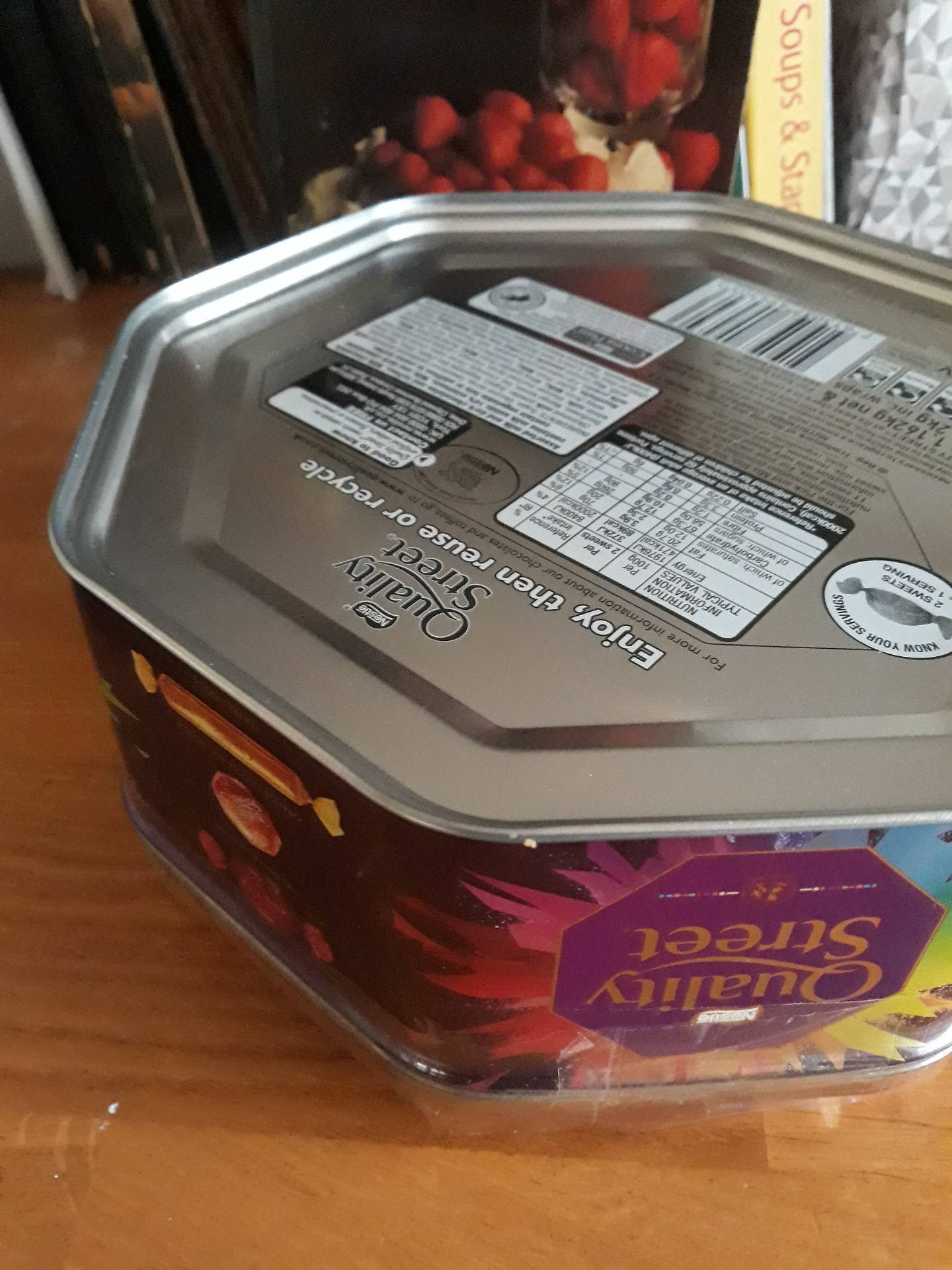
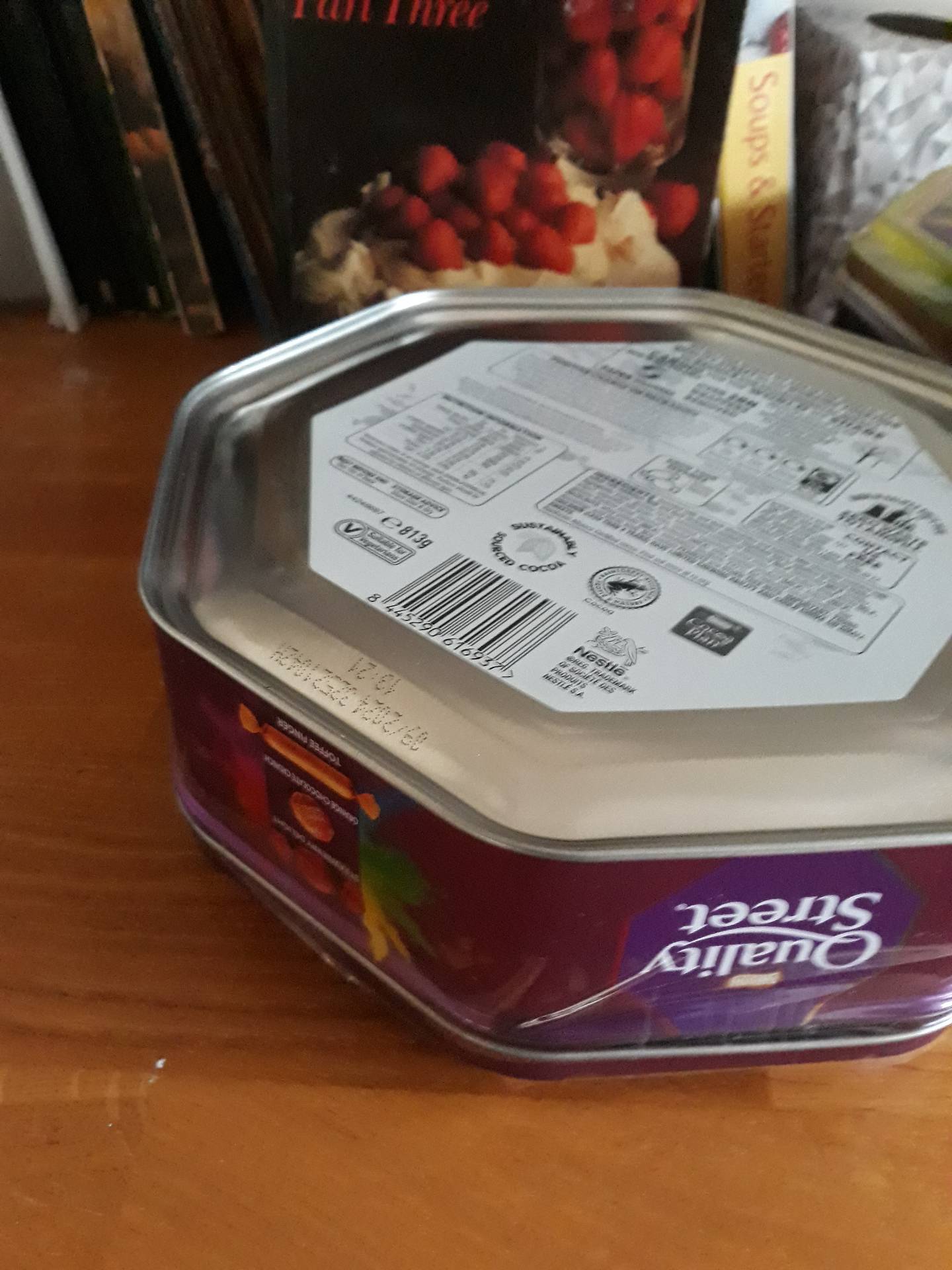
This year was the baking year, and out came the tins from the kitchen cupboard. Alas, while it has the same footprint and construction, the new tin is not tall enough by about a centimetre to accommodate the wrapped cake and seal the lid. Bad words were said.
Fortunately instead of cooking the cakes simultaneously, they were done one after the other; I had time to “improve” the new tin while the second cake was airing.
The old panel beating skills returned. Now, instead of the base being raised about a centimetre into the tin, for even fewer sweets inside, it has been pushed down level with the worktop with the aid of a dessert spoon. The lid which was likewise designed to reduce volume has been pushed out as well, gaining another half a centimetre.
The identical second cake now fits!
Pic of the old 1.162Kg tin base showing how it’s recessed into sweetie space.
This is a good idea! I make Mary Berry’s Christmas cake each year, normally in November so it has time to soak up some sherry and brandy, however your method offers better maturation options. Maybe I’ll make one in January for next year.
Making only one cake means several half-packets are left over!
The quantities ingredients are sold in mean that one packet of each major component tends to make two cakes. Rounding up the original recipe quantities slightly makes it easier, with less weighing required.
eg 1lb currants (450g) rounds to 500g, and 8oz (225g) each of butter, flour, brown sugar go to 250g. 4 eggs go to 4 large eggs, and so on.
Although two cakes seems twice the effort, even baking them (4 hours each!) sequentially means my total kitchen time taken actually working on them is less than double that for one cake. And only one lot of tidying, washing-up and cleaning.
Steeping the fruit overnight; the whole lot goes in one bowl to be shared out later.
No longer having a stand mixer, (only two left-over antique Kenwood bowls), the most physical-working time is carefully blending the sugar and butter to be “fluffy.” Simply make sure the butter is really soft (not runny) to begin with, so much easier.
The other worthwhile time-waster is in cutting the grease-proof paper layers to wrap and line each tin, etc, so the mixture cannot escape and glue the ring to the base, while yet slowing down heat from the oven into the mixture so the edges don’t burn.
We only found out by accident how very, very good an Xmas cake is a year later. In the year I made it (three months early for lots of good maturing) we were so busy with events, family and guests I completely forgot to dig the waiting cake out of storage.
I only found it the next November when I picked up the “empty” tin and found it was full of a delight.