Blocked cylinder head? 1.6 NB

This is a spinoff post from my other thread as the plot has thickened!

Background:

Overheating issues on my 1.6 NB. See my other thread.

Work done:

New radiator already fitted. Aftermarket temp sensor already fitted to top hose. Thermostat removed. Thermostat housing replaced. Water pump replaced. Head gasket replaced.

The issue:

After swapping the head gasket and water pump, there was a major overheat on the first drive. The expansion tank filled and spilt over, coolant boiled in the engine block, and there is now white smoke from the exhaust and some mayo on the oil cap.

Further investigation:

I removed the radiator bottom hose from the engine and water flowed through the radiator fine.

I attached a garden hose to the heater matrix pipe from the thermostat housing with the cover removed, water flowed out of the housing fine.

With all pipes back on and the thermostat housing cover removed I ran the engine, water gushed out.

With everything back together I removed the radiator top hose and ran the engine, barely a trickle came out.

Tentative diagnosis:

I think that since nothing came from the top hose but water poured from the thermostat housing, this means there is a blockage in the cylinder head. Since the thermostat is removed there shouldn’t be anything preventing water from flowing. I think that water coming from the thermostat housing proves that the water pump works and there is no blockage in the engine block or restricted flow from the radiator. Water can get in but can’t get out.

When I flushed the system a lot of soil came out, when I removed the old thermostat housing cover it was almost entirely blocked and the old temp sensor was buried in hardened crud and didn’t work, so there has definitely been a lot of gunk in the system.

Since the temp sensors are on the top hose (aftermarket) and thermostat (standard) and the coolant isn’t flowing, the actual temp of the standing water inside the engine may be much higher than indicated. I think this overheat caused the new gasket to blow, head to warp, or both.

Questions:

My main question is whether my logic and assumptions are correct. It’s the first time I’ve done anything quite like this, I’ve never had the head off of an engine before.

Secondly, what should the plan of action be? I’m assuming it’s a case of remove the head, inspect the water galleries and clear any blockages, check if the head is warped and needs skimming, replace the head gasket with another new one, rebuild & pray.

Thirdly, if there is anything else worth checking before removing the head again I’m all ears!

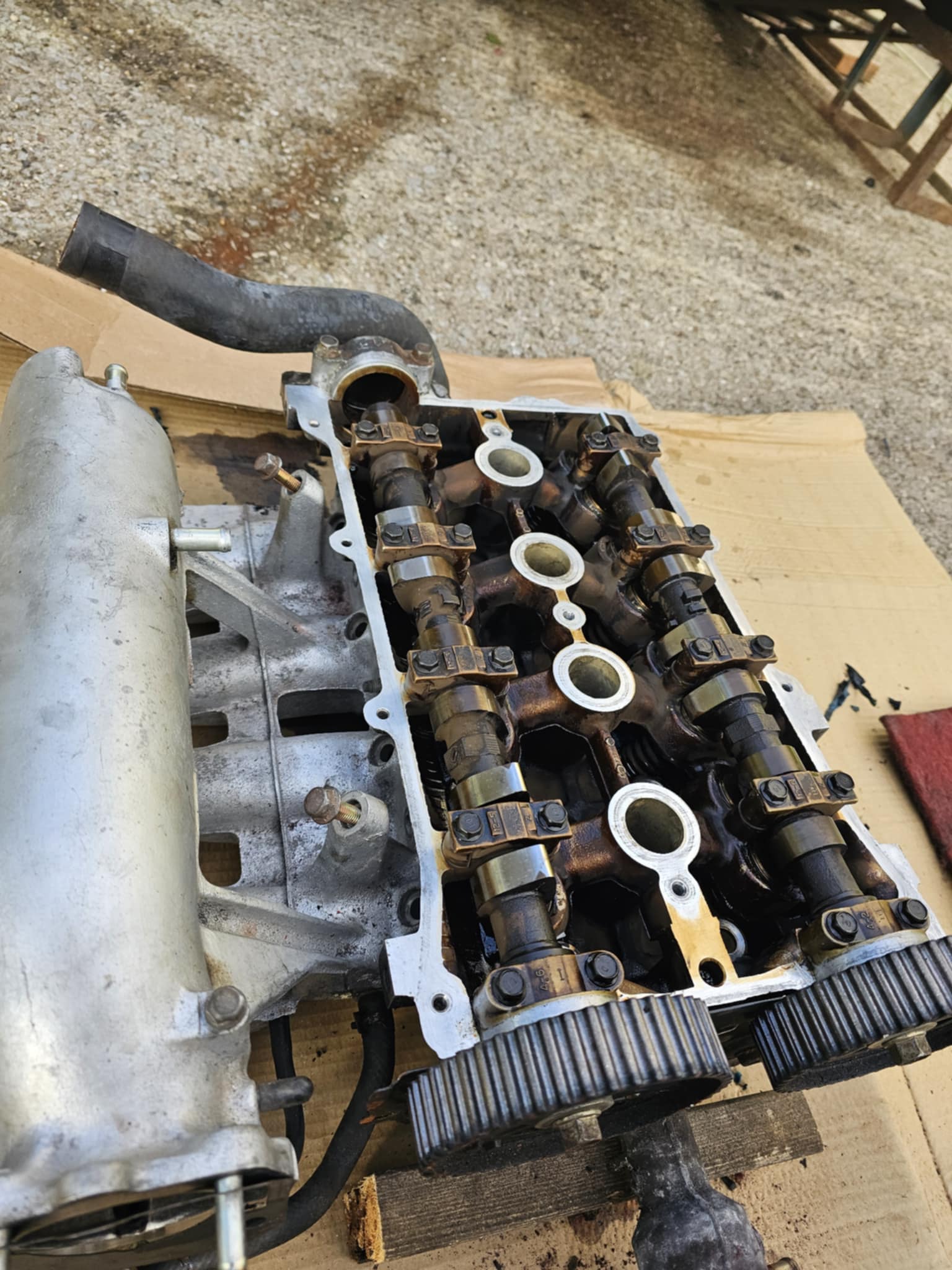
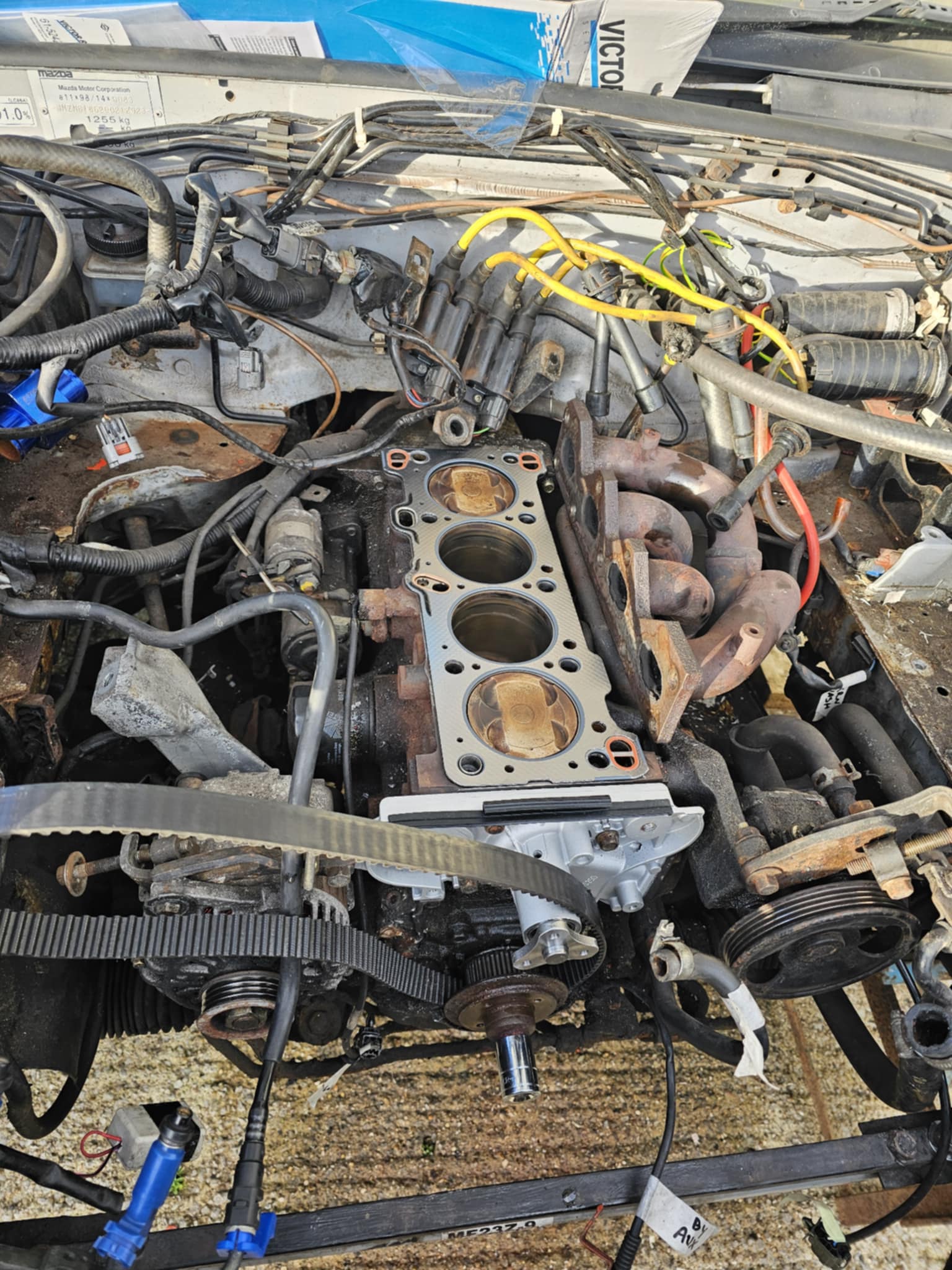
New gasket and water pump:
I’m wondering if this is what happens when incompatible antifreezes are mixed. Do they react and create this kind of mess?

Gemini AI has it as this, for what it’s worth. Note comment at the end re professional chemical flush… :confused:

Mixing incompatible antifreeze (coolant) can lead to severe and potentially permanent engine damage due to chemical reactions between different additive packages.

Immediate Consequences

  • Gel and Sludge Formation: The most common result of mixing Inorganic Additive Technology (IAT) with Organic Acid Technology (OAT) is a chemical reaction that turns the fluid into a thick, gelatinous sludge or ā€œbrown gunkā€.

  • Clogged Cooling System: This sludge blocks narrow passages in the radiator, heater core, and engine block, preventing the coolant from circulating.

  • Reduced Heat Transfer: Mixed coolants are less efficient at absorbing and releasing heat, increasing the risk of localized ā€œhot spotsā€ in the engine.

Long-Term Damage

  • Engine Overheating: Because the sludge restricts flow, the engine can quickly overheat, leading to catastrophic failures such as blown head gaskets or cracked cylinder heads.

  • Corrosion and Oxidation: Incompatible corrosion inhibitors can neutralize each other, leaving internal metal surfaces (like aluminum blocks or radiators) vulnerable to rust, pitting, and cavitation.

  • Water Pump Failure: The sludge can damage the mechanical seals and impellers of the water pump, causing leaks or total pump seizure.

  • Degraded Seals: Certain mixtures can produce corrosive acids that eat away at rubber gaskets and plastic components throughout the cooling system.

Critical Indicators and Solutions

  • Don’t Rely on Color: Modern coolant colors are not standardized; same-colored fluids can have different chemistries, and different colors can sometimes be compatible (like universal coolants).

  • The ā€œEmergencyā€ Rule: If you are low on coolant and don’t have the correct type, it is safer to top up with distilled water than to mix incompatible types. However, this should only be a temporary fix as it lowers the freezing and boiling points.

  • Required Action: If you have already mixed incompatible fluids, you must perform a complete system flush immediately. Simply draining the radiator is often insufficient; a professional chemical flush may be required to remove all traces of gel or sludge.

3 Likes

Thanks for the info, there could be something in that. I’ve not had the car long, but it already had an aftermarket larger radiator, aftermarket temp sensor, and thermostat removed. So it probably had some issues with overheating before. I reckon the original radiator disintegrated and filled the system with pieces and then the previous owner replaced a few parts before giving up on it. Considering some of the dodgy fixes elsewhere on the car I wouldn’t trust the previous owner to have used the right antifreeze!

I’ve only been using OAT antifreeze since I’ve had it, but no idea what was in it before. I’ve flushed it several times and run the hosepipe through it, I think everything but the cylinder head is flowing freely.

Am I right in assuming that the block and water pump are fine if water flows out of the thermostat housing?

Is there anything else between the thermostat and radiator top hose that could be blocked, or is it just the head?

No idea, sorry. Could it be an air lock when you refill it?

If nothing can come out of the top hose then possibly air locked. I ran the engine with the top hose off and a garden hose in the top of the filled radiator, and nothing came out of the top hose from the engine.

Maybe you could try crimping the heater core hoses to force the coolant through the front of the head rather than the back? (So long as they are silicone hoses as the oem ones have a metal support within )

I can give it a go, they’re OEM hoses but I can always blank them with something. The top hose comes from the back of my engine, so I’m getting water out of the thermostat housing at the front but nothing from the top hose at the back.

Ah so that means you have a coolant re-route kit fitted. you may need to ask someone familiar with this system.

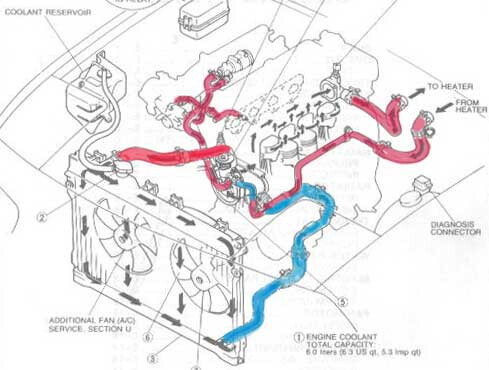
This is what you should have:

i.e. the top hose for the radiator comes directly from the thermostat housing on the front of the engine.

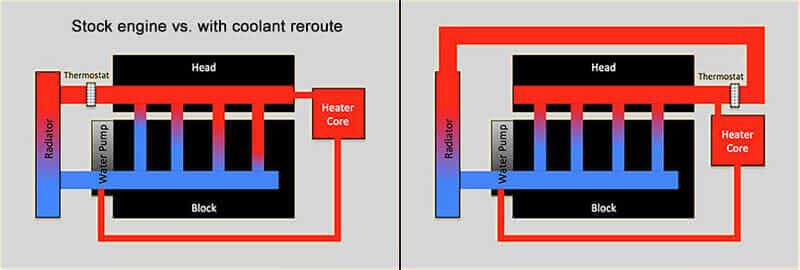
It sounds like someone may have re-routed the coolant circuit, in which case, the thermostat will be at the rear of the engine against the firewall (or possibly in an in-line fitting within the top hose).

What do you actually have?

1 Like

1 Like

You have something like this.Bofi racing skid nation reroute kit

1 Like

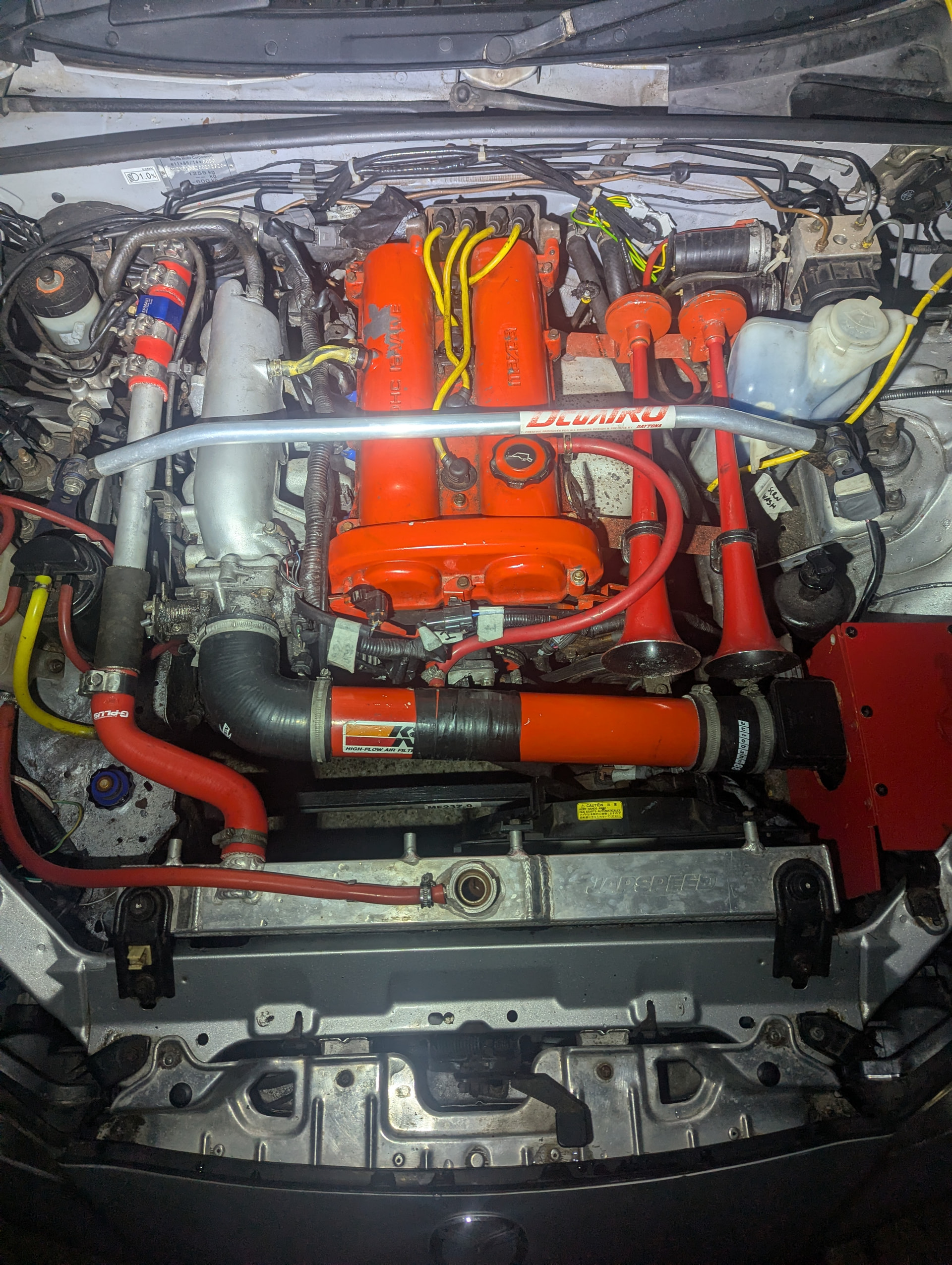
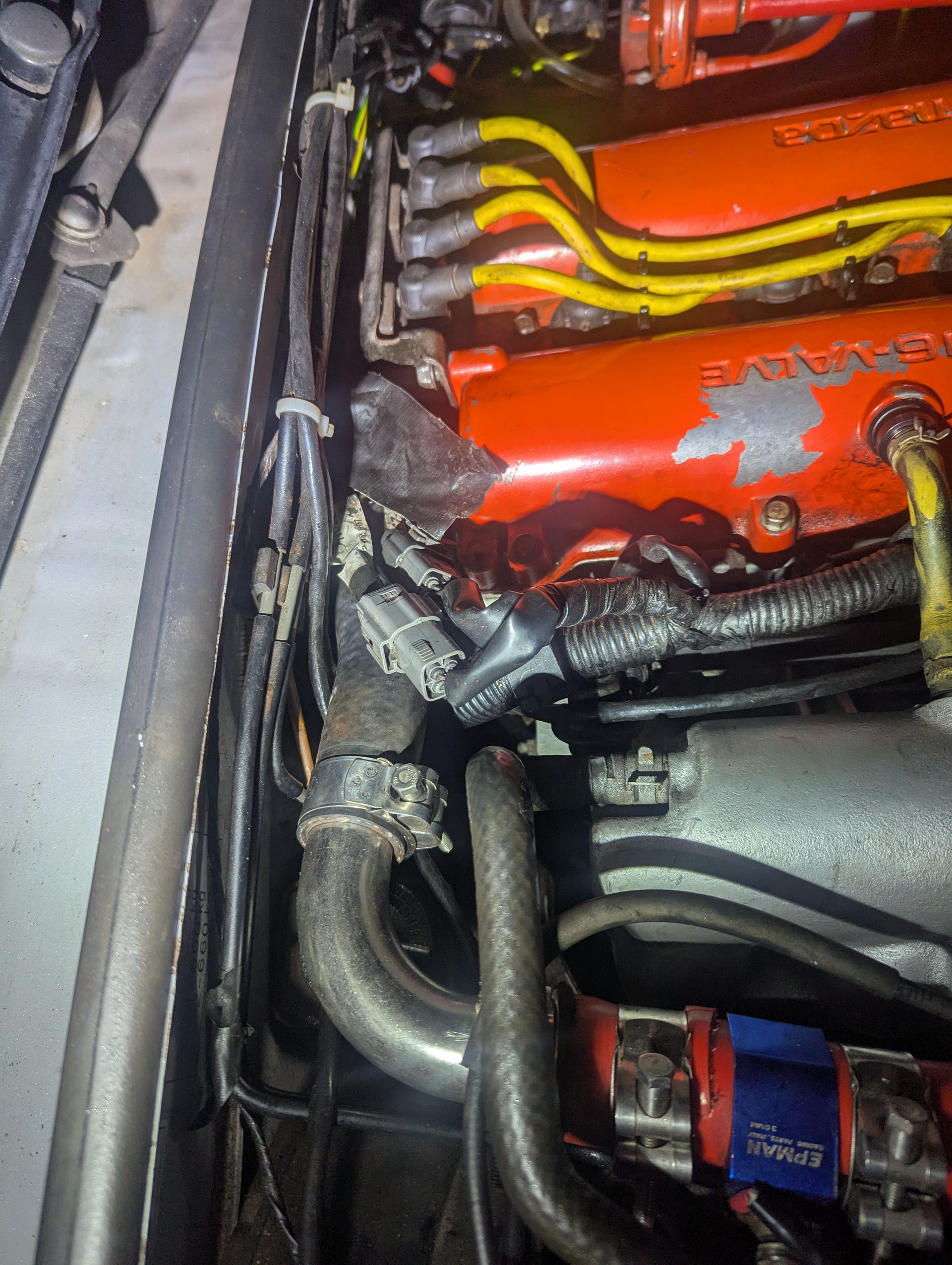
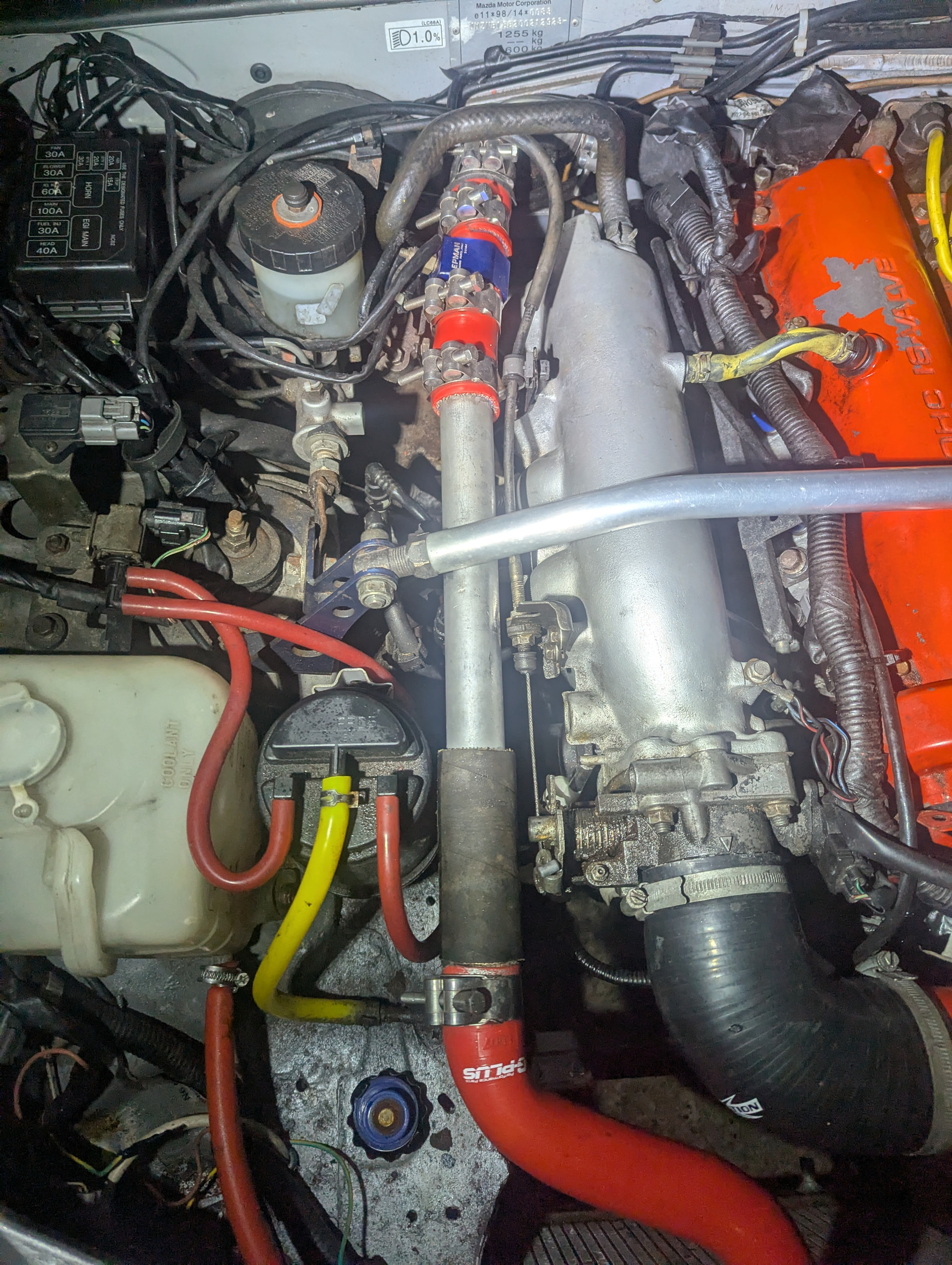
I have this. The hose on the left from the radiator is the top hose which has nothing coming out when I disconnect from the radiator.

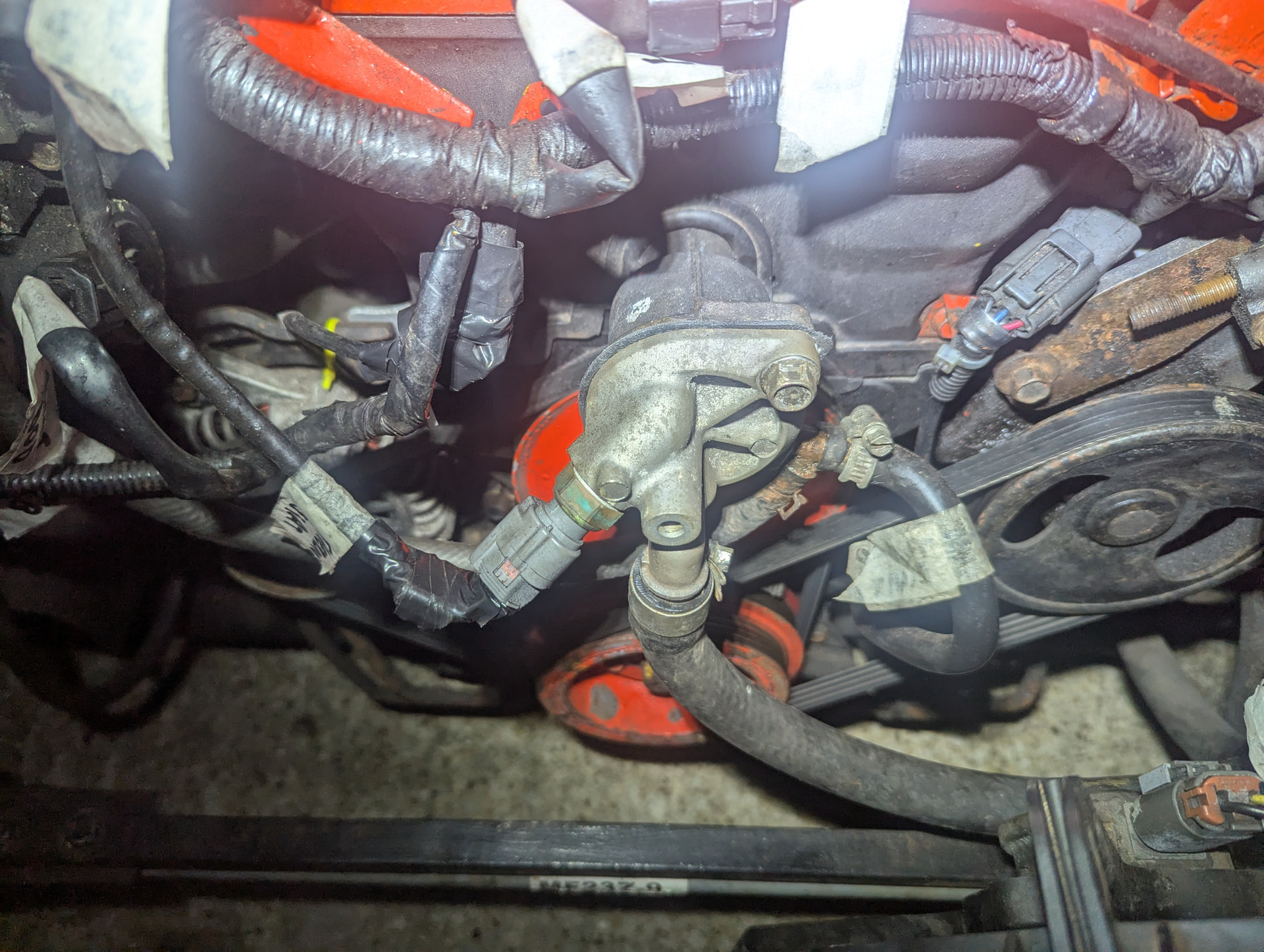
The thermostat housing is where water will come out when the cover is removed and the engine running, but there’s no thermostat in there.

Yea that looks like what I have going on. Does this mean that there will be a thermostat in the black pipe attached to the back of the head then?

Yes, you have a coolant re-route.

The front thermostat housing is now redundant as regards main cooling water flow. Don’t fit a thermostat in it.

The thermostat may be in the blue metal ā€˜Epman’ housing in the top hose towards the rear of the engine, or it may be in a thermostat housing bolted to the rear of the engine that the top hose connects to. (The second is probably the more common way of doing it.)

The cover on the front thermostat housing was originally on the back of the engine.

1 Like

Thanks, that makes sense. The blue epman thing is just an aftermarket temp sensor. When I ran the engine with the top hose disconnected, I also tried it with the hose removed back to the black rubber hose at the rear of the engine and nothing came out. I ran the engine up to temperature and still nothing, so it sounds like the thermostat could be faulty or just clogged up. Seems like this reroute system could be more prone to getting air-locked than the standard setup?

I’m kicking myself for not checking that black pipe when the head was off, but since the top hose was getting hot I just assumed coolant was flowing through the engine fine!

I think that’s your problem.

If the top hose is routed higher than the radiator, then it will be more difficult to get all of the air out. Some of the reroute kits run under the inlet manifold, so shouldn’t be much different.

Possibly someone has re-purposed a front thermostat housing for the reroute and have added the Epman fitting to relocate the stock ECU temperature sensor.

1 Like

Thanks for that. Hopefully it’s just a blocked or broken thermostat then. Probably still going to have to take the head off again since I think the new head gasket has blown :disappointed_face:

Did you resolve this?

Not yet, I haven’t looked at it again since finding out I have a coolant re-route kit fitted. I’m waiting for it to be a bit warmer before taking the head off again!

1 Like