I’m looking for technical help or recommendations on: __ Brake Master Cylinder
Hi. Apologies for long post but I am at my wits end.
Tizzy went in for a service the other day, new engine oil, gearbox oil and because I was getting clutch slip when really hot (slow of stationary traffic, since having the BBR GTi Stage 1 Supercharger) , I also asked for the brake fluid to be changed to DOT 5.1
All this was done by a local garage, originally owned by a neighbour and now run by his son.
Kindly they did this whilst I was away, collecting and delivering the car back.
Service carried out, brakes tested and car returnbed home without problem.
However…it was return on the Thursday and by Saturday on my return, I took her out for a spin and the brake pedal had pressure, but only when stamped on, otherwise when pressed slowly it went to the floor.
Showed this to neighbour, took the car back back. Told that the master cylinder seals had failed, it was old, probably has never been replaced blah, blah, blah. They could not get a new MX-5 NC Master (with DSC)…so I got one from a reputable scrap mechchant. No problem, garage fitted it, tested o.k. and returned car. On the same night, I tested it. It didn’t seem quite right but was stopping and ABS was working.
However…the very next morning, pedal goes to the floor with light pressure again!!!
What could be going on?? I can’t imagine I’ve been unlucky and a second master cylinder has “just failed”
can you see any leaks from under the car? and is the brake fluid level okay and on the full mark?
Sounds like there is air in the system if bled poorly. would be very unlucky to have a master cylinder break twice. Since it happened right after you asked for the fluids to be changed, it sounds like it was probably a bleeding issue.
So while the mechanic said the master was shot as fluid was passing the seals and therefore the seals had collapsed, it could just be poorly bled system?
Well, as they are known to be a problem bleeding that would seem the cheapest first option. I’m no expert but is it because of the shared reservoir with the clutch feed higher than the brakes makes the clutch harder to sort out?
That was one of my thoughts, but I can’t believe someone can be that stupid. Have ordered a syringe from Amazon to extract a sample and see if it mixes with water or not.
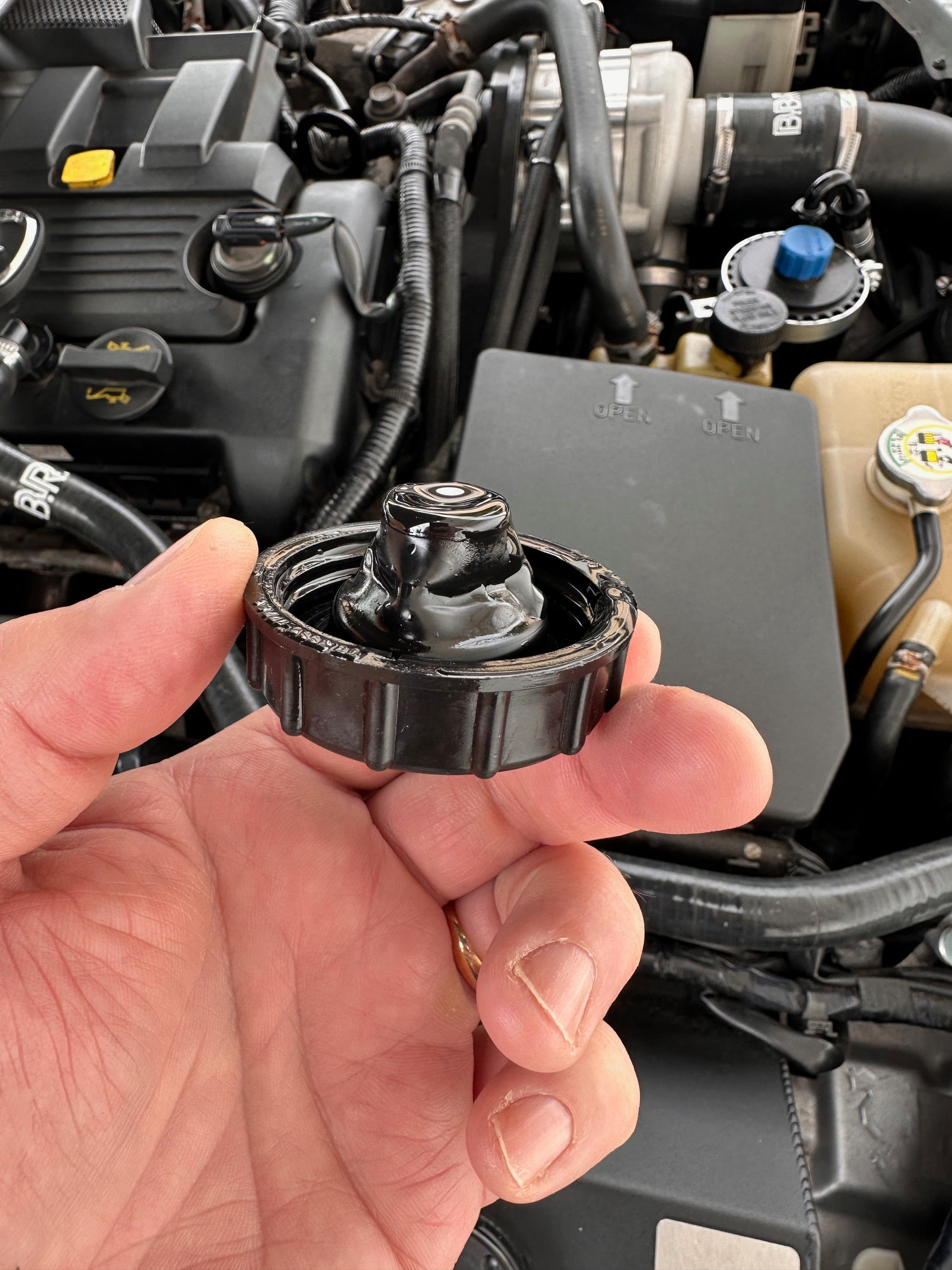
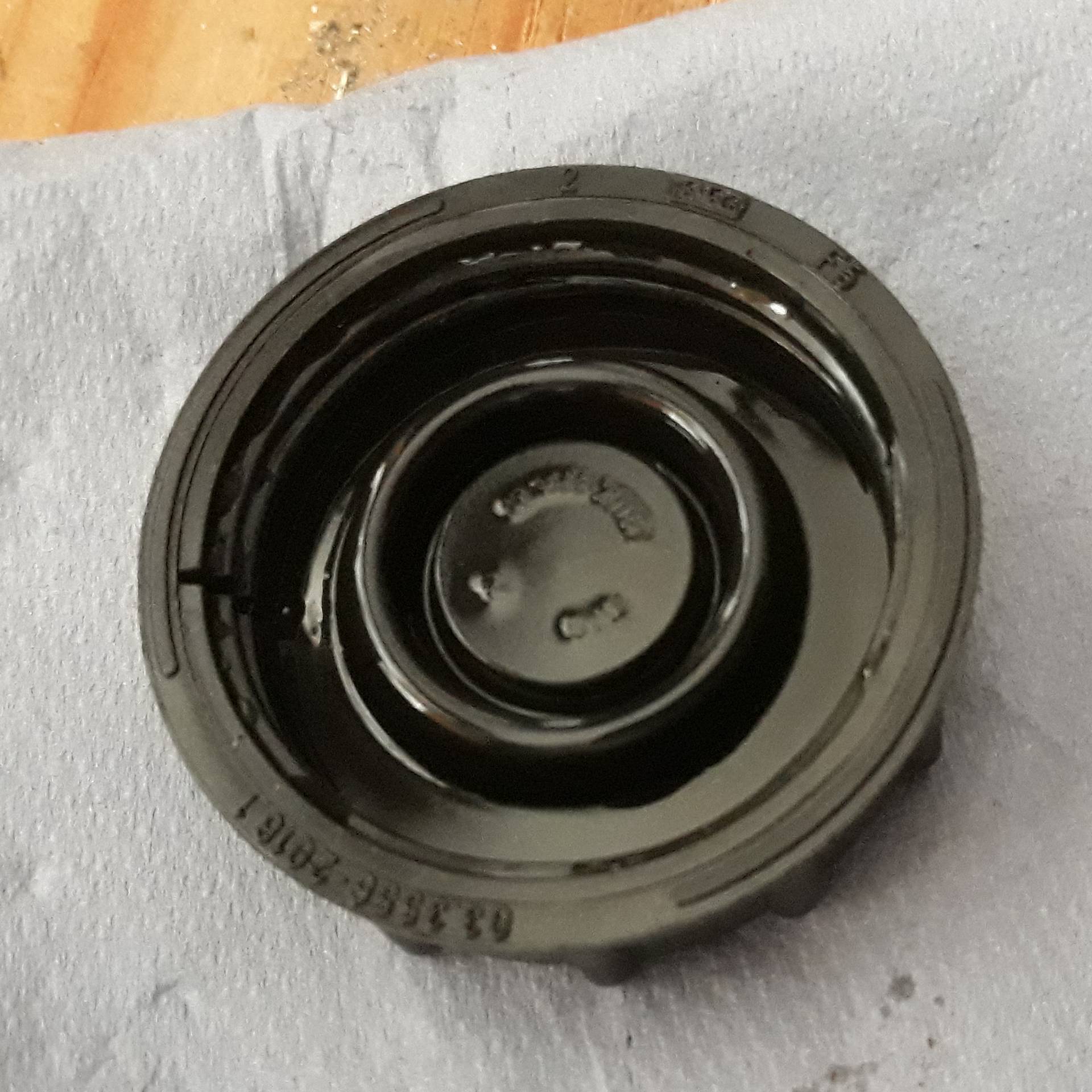
Here’s another piece of the puzzle. Here is a picture of the “new second-hand” brake fluid reservoir cap. The original “failed” master cylinder cap looked like this too. Doesn’t look normal to me. What could cause this to happen??
Hmm, that lump in the centre is not present on my 25AE master cylinder cap. I think the bellows has been cooked in the sun while the exhaust warmed it from below; it became a bit limp…
It has not sprung back to where it should be, as here
Here’s another question. With the master cylinder failing, should I be experiencing issue with the clutch since they share the same system fluid, as there are no issues with the clutch.
It’s a small bellows. It may have gone like that if you’ve used/lost a lot of brake fluid - the bellows flex to take up the volume of fluid lost. Beyond a certain point, they just turn themselves inside out a bit. With a little coaxing, it should pop back into position like @RichardFX 's picture.
Well, as much as I wanted to find the root cause, because its my neighbour, I wish it wasn’t this.
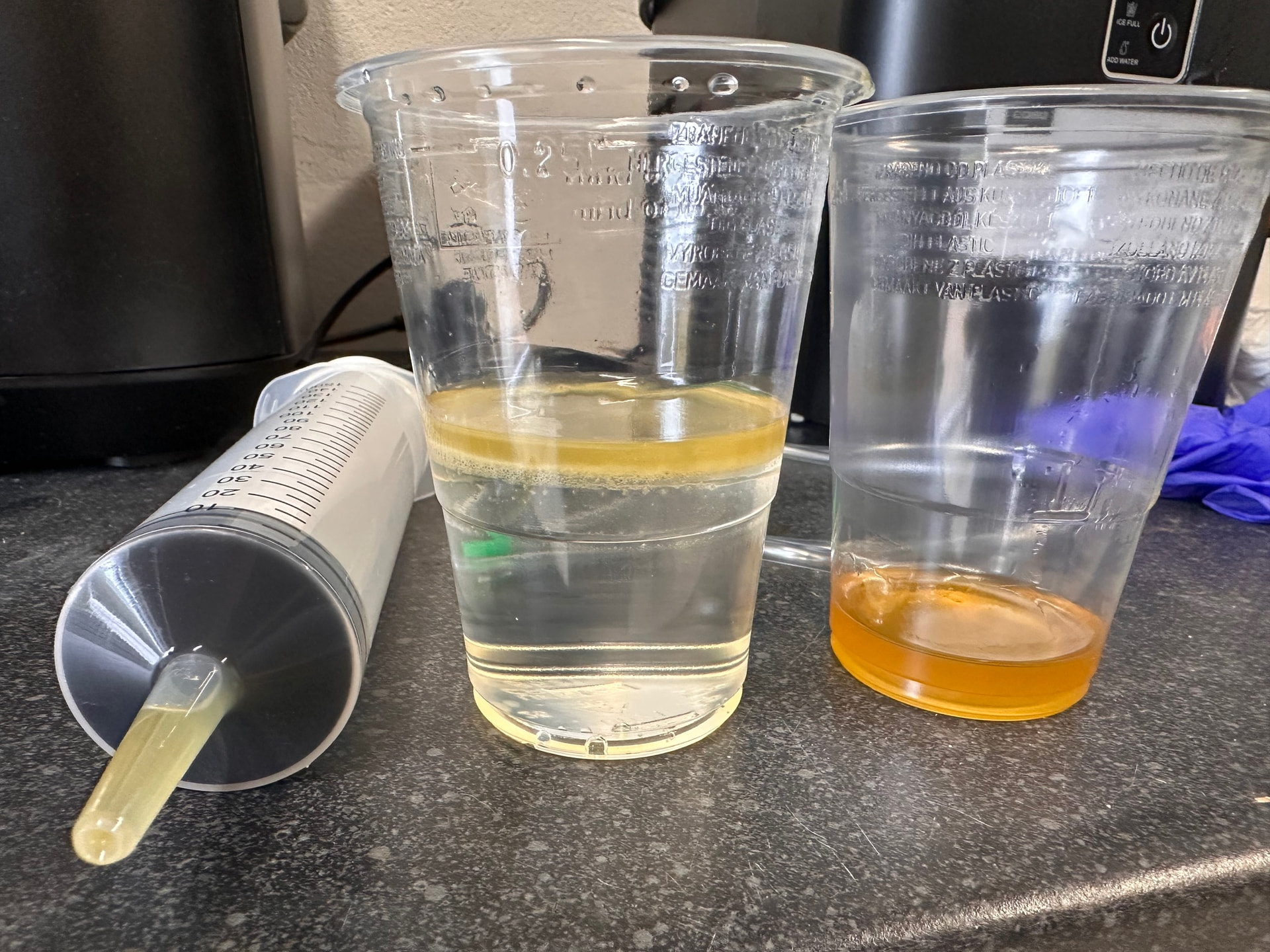
Syringe arrived, took a sample (you could tell immediately by the colour that it wasn’t right) and added it to water. DOT3, DOT4 and DOT5.1 shouldn’t float.
Clutch was brand new, stage 1, installed with the supercharger and forged internals.
Clutch bite point changed significantly when standing in prolonged traffic. Was the reason why I wanted to step up to 5.1 However, will take advice and maybe use DOT4 that exceeds DOT5.1 standards.
The bellows is a clever trick to minimise water ingress to the reservoir from humidity in the air.
It seals the system but can accommodate fluid level pumping up and down a little bit in normal use.
If one checks the fluid level regularly, taking the cap off, then any pressure/vacuum is relieved and all can work as normal.
Putting the cap on again tightly after a top-up during bleeding might cause less effective bleeding of brakes or clutch.
If the bellows is distended, and replaced like that, ie not popped back but the cap well tightened down, then the system might be less effective, and some bets might be ooff…
At the moment, all I can say is that it is not a glycol based fluid, but a hydrophobic fluid.
The logic is that a petroleum or silicone based fluid has been used (either knowingly or unknowingly) and over 2 days, the rubber seals perished in the master cylinder allowing fluid to pass by the seals and back into the reservoir, thus allowing the pedal to sink to the floor.


 Sorry.