I’m slowly accumulating parts for a full engine rebuild. I have a stage 1 exedy clutch kit. Question is, lightweight flywheel? I read so many pros and cons. Perhaps not competition level but maybe 25% lighter. Any real world feedback?
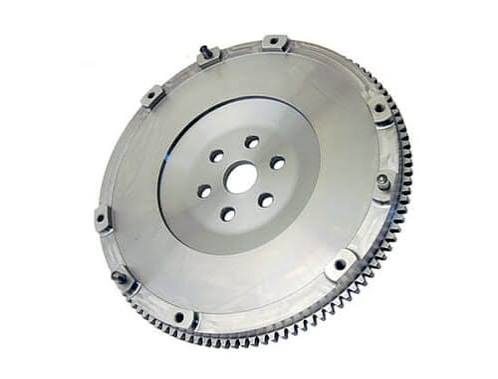
No experience on my MX-5, but had them on a few kit cars. Not sure what your use case is, but I wouldn’t want them as a daily as they can chatter and you lose a lot of inertia in the car, It’s almost like someone is gently applying the brakes when you come off the throttle. I almost got rear ended a few times as obviously there’s no brake lights to warn people.
Revs so freely though! Very noticeable in neutral giving it some throttle, still noticeable driving, but not as much.
1 Like
I have one on my 2.0 NC2. Will never go back. Possibly slight increase in gear noise, but everything else is a massive positive. The engine feels much more alive and tolerates fast shifts a whole lot better. Even heavy traffic is easier as the engine revs up quickly to get going.
Wish I’d gone even lighter. If I recall, my flywheel is 44% lighter than OEM. remember your engine internals and clutch parts are not lightened from this so your overall engine rotating mass doesn’t decrease nearly as much as 44%.
I’d go for a 3KG flywheel on my 2.5 swap if I hadn’t already bought it. The extra torque would probably make that feel great. Instead of varying the clutch pedal, you vary the throttle more as the revs drop faster.
1 Like
How does it behave in start stop traffic? I’m worried that my wife might end up hating it.
To be honest the clutch pedal bracket broke shortly after I installed it (unrelated), and ended up with me adjusting it far enough to block the master cylinder inlet - so the clutch was behaving as if it’s constantly pressed halfway and destroyed the engine thrust bearings.
From the limited time I had to compare without other clutch weirdness happening, I’d say it needs a little more thought initially, but with practice it’s very easy in standstill traffic, even uphill. If you’re not in the mood to be interested in driving then maybe someone wouldn’t like it, but I found it way easier to pull away quickly. Makes the stock flywheel engine feel like a tractor or diesel. IMO flywheels should be a friction surface only with no added weight 
any clatter noises?
I find tech discussions on this sort of topic very interesting (really, no irony). The very, very nice Mazda engine design lends itself to all sorts of enhancements. And I can dream.
However, has anyone done the maths on changing crankshaft resonances after the mass and rotational inertia has been altered by flywheel lightening?
I ask because we were highly amused at school (driving licences at 16 in Africa) by one enthusiast who wanted to improve his Dad’s early MkIII Zodiac out of all recognition.
First he added a multi-branch exhaust from Derringtons and fatter pipes etc. Then two SUs appeared, but these were soon replaced with a twin-choke Weber, then three SUs. It was never quite right.
It had a tendency to over-rev with wheel spin in any gear on our dusty roads. But that never bothered him, remoulds were very cheap.
He glossed over the inadequacy of only four main bearings in the Ford 2.5litre push-rod straight six.
Finally he fitted his own custom copy of the Jag torsional vibration damper on the front of the engine, and he was thinking about lightening the flywheel. But those thoughts quickly vanished as he reversed it out of the school workshop with customary wheelspin and immediately snapped the crankshaft!
Adding the damper had changed the resonances, as our maths master (one of the first E-type jag owners) was able to demonstrate why with some ‘S Level’ sums. The sums also suggested valve-bounce and push-rod flex would previously have protected the crankshaft before the risk of resonance; Ford had optimised it for a low cost, long life design. And the flywheel should not be lightened!
That engine was not a good one to modify.
In the end that Zodiac acquired a 3.4 Jag engine, and it lasted most of the way through Uni before the car lost a battle with a substantial tree.
1 Like
I think overall I’ve decided against it. It is a big rabbit hole, and from a lot of the posts I read, people are a bit biased because they spent the bucks so saying it’s probably worse for a road setup it means coming to terms they’ve made a mistake. Even chatGPT is against it 
No, nothing like that when it was all working. I didn’t really notice a single downside except my gearbox was too worn out to shift fast enough when cold, so the revs would drop too low.
Rebuilding it soon though so it should be perfect then. I’d never want a heavy flywheel on any car - I’ve had to buy a cheap Civic recently while I fix the project cars and the flywheel is infuriatingly heavy and sluggish.
The forged crank of the NC2+ probably is a huge help against this, and you can buy a Fluidampr that should be able to cancel out pretty much all resonances I would think.
Interesting thought - I don’t think the flywheel would have a massive effect on the durability as lightening surely would help each end of the crank to “keep up” with the other and have less twisting motion.
Admittedly, I’m far enough on the “Dunning-Kruger” curve to know I don’t really have a clue what the effects could actually be in an engine, especially considering other mods! I do know that issues caused by flywheels on these cars seem exceedingly uncommon. I’ve never seen a report of one.
It will have a different elasticity to the earlier one.
Until one knows the crank’s torsional elasticity and the rotating and reciprocating inertias and masses and the pivot centres and throws of all the moving parts, it is impossible to even guess!
However what took my Maths master an evening to work out with pencil and paper might take a fraction of a second on a correctly designed spreadsheet.
Now design the correct algorithm for the spreadsheet…
Now doesn’t that sound fun 
I don’t think any Duratecs at all are known for crank failures, which does make you wonder why Mazda actually went with the forged crank for the NC2.
People do rev the NC1s to 7500 when tuning sometimes, so I’m not really sure why they bothered as the crank doesn’t seem to be the limiting factor for revs or power… Were they planning a turbo or highly strung NA model?
You’re right though - we can’t really begin to predict without some serious research, but I think we can generalise and compare to known facts in other engines. I know generally resonance is how cranks fail at high revs, and forged cranks are usually an upgrade to enable higher revs or more torque - so it might be comparable?
In conclusion: I am not going to worry about my flywheel causing issues haha
How about fitting a throttle commander ?
Ive Just bought one and will be fitting soon should have better response. I had one on my Cayman it made a massive difference so I reckon it will be a safe bet.
Interested to hear how that goes. There’s no magic to one of these, we mostly all now have fly by wire throttle control, one of these devices just allows one to control that rate of opening/ closing said throttle.
I had a 3.0l BMW Z4 that came with one & I must confess it made that car ( which, always felt a little choked & asthmatic IMHO) so much better.
Total upgrade was considering a supercharger but definitely don’t need one now ! Feels like an extra 50hp.